
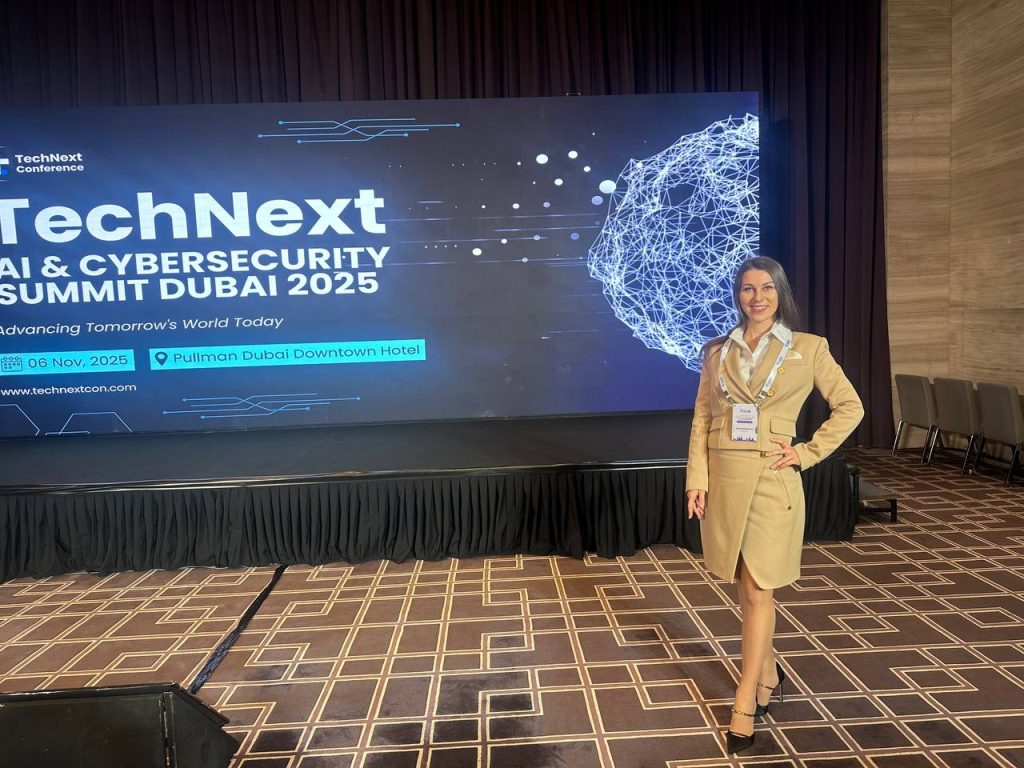
While we’re teaching kids prompting, cybercriminals are already making trillions — using the same AI. While we’re teaching kids prompting, cybercriminals are already making trillions — using the same AI. At TechNext Conference, experts revealed how AI in cybersecurity 2025 is changing the rules of defense and attack alike.
The Alarming Rise of AI-Powered Attacks
At TechNext Conference, I heard sobering numbers: $10.5 trillion lost annually to cybercrime. In September 2024, two Miami teens stole $213M in crypto using AI-powered phishing posing as Google support. In February, a CFO was “cloned” via deepfake video call — the company lost $25M.
And 63% of breached companies have no AI policy at all.
Here’s what’s changing right now
The rise of AI in cybersecurity 2025 has blurred the line between attack and defense. Hackers used to search for vulnerabilities manually. Now, however, AI scans networks, writes personalized phishing emails for each employee, and exploits cloud “holes” faster than any specialist can detect them. The biggest breach? Us. 83% of organizations faced insider attacks in 2024. An employee clicked a link at the airport, connected to coffee shop WiFi from a work laptop — game over.
But there’s a flip side: AI learns to protect. Machine learning detects threats in real-time, automated systems “hunt” anomalies, AI-powered SOC centers work as smart assistants for analysts.
The real problem
What happens when the defensive AI itself gets hacked? Who will verify that the model protecting us isn’t compromised? Experts say we need new professions — like “prompt injection warriors” who’ll protect corporate LLMs from manipulation.
When I discuss this as a speaker during /function 1 conference, I will discuss this problem for sure.
What to do right now
→ Train your team: 90% of attacks succeed due to human error
→ Implement AI monitoring, but with constant model auditing
→ Move from “checklist boxes” to continuous risk assessment
→ If you’re blocking ChatGPT for employees — you’ve already lost. Better teach them to use LLMs safely
Therefore, cybersecurity isn’t about antivirus anymore. It’s about culture where every employee is the first line of defense. Or the first vulnerability.
Bottom line
Don’t fear AI replacing you. Fear those who’ve already learned to use AI for attacks — while you’re still deciding whether to deploy it for defense.
Is your company ready for an era where computers attack computers without human involvement?